Endurance sport is, in terms of motor control, relatively low-skill. That's not a criticism. It's a mechanical observation. Running, cycling, and swimming require technique, but once the pattern is learned it becomes automated. Training shifts to fitness: the effort, the volume, the consistency. Movement stops needing attention.
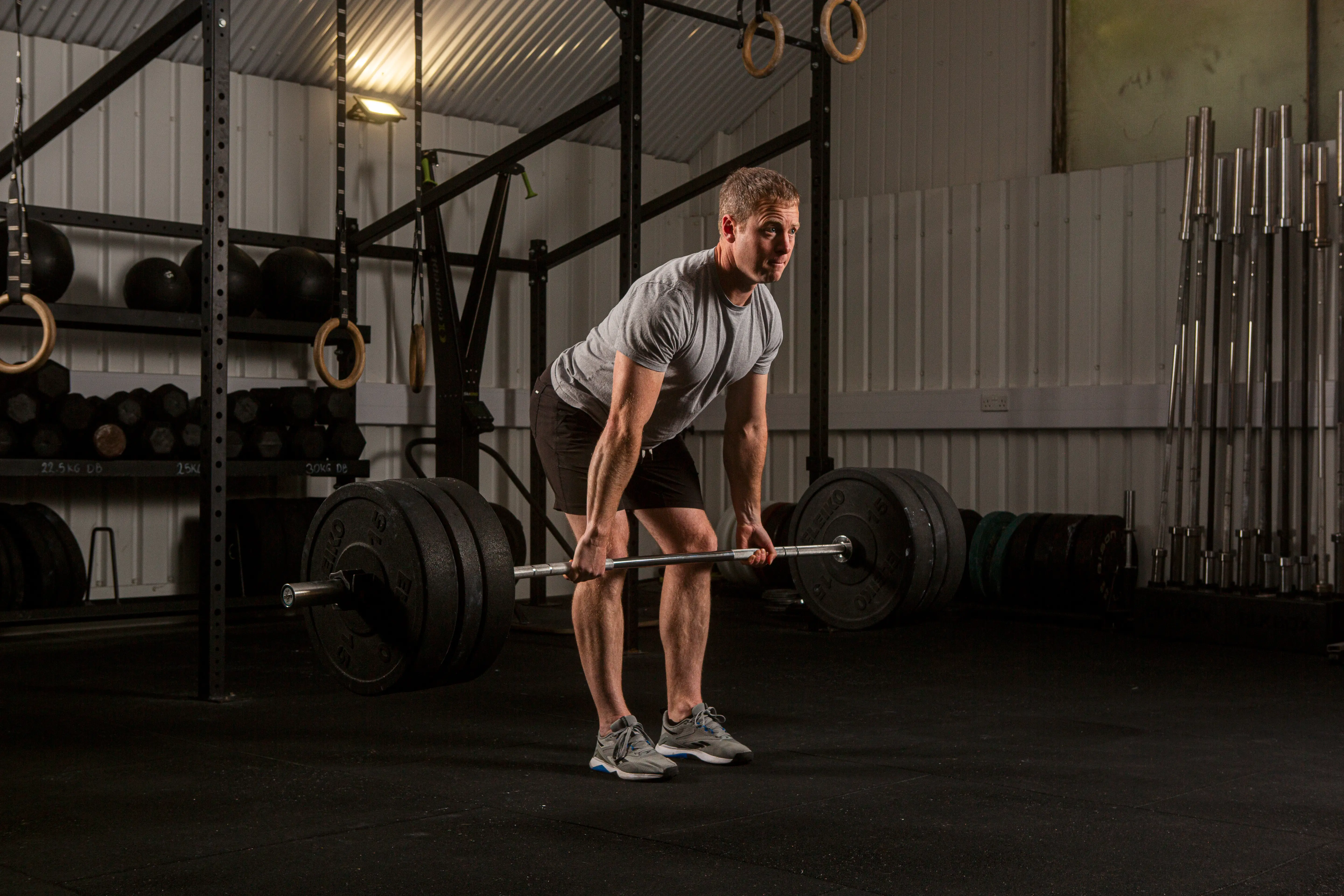
Strength training doesn't work that way. Every exercise is a skill with layers of complexity beneath the surface. A squat is a full-body coordination event. A deadlift requires position, bracing, and sequencing that takes months to develop properly. A single-leg exercise exposes asymmetries and instabilities that years of running will never address.
The endurance athlete who walks into a gym and treats a barbell like a bike, something to be pushed harder once you've worked out the basics, is going to hit a ceiling quickly. Not because they lack effort, but because effort isn't the variable that matters most at the start.
Think about learning to drive. At first, the cognitive load is enormous: mirrors, pedals, steering, road position, other cars. Over time it becomes automatic. But passing your test doesn't make you a racing driver. You've learned the skill to a level of basic competency, then development stops.
Most people's movement works exactly the same way. Endurance athletes often arrive in the gym with a narrower movement vocabulary than their fitness level suggests.
The Big Three
When I watch a new endurance athlete move, there are three muscle groups that are consistently underactive. Not weak in the cardiovascular sense — just disconnected. The athlete can't reliably feel them working, and under load they don't fire when they should.
Glutes. Ask most endurance athletes to do a lunge and watch what happens. The weight drifts forward onto the toes, the knee tracks inward, depth becomes limited. Not because of tightness — because the glute isn't controlling the movement. The body defaults to what it knows: the quads. Cycling compounds this particularly well, because the position is inherently flexed and the quads do most of the work naturally. Add eight hours a day at a desk and the pattern is deeply ingrained long before anyone sets foot in a gym.
Lats. The lats are the largest muscles in the upper body and one of the most important for creating the stability and tension needed in a hinge or a pull. Most endurance athletes can't feel them working. Rows are a common early exercise, but if the lat isn't engaging, you're building a compensation pattern rather than genuine strength. This matters for swimmers especially, but it shows up across all three disciplines.
Abdominals, specifically in their bracing role. This is the most consequential of the three and often the least understood. A sore lower back in a plank, or an inability to maintain position in a deadlift, is often the body signalling that the trunk isn't organised correctly. The abdominals aren't just about crunches and planks — their primary job in strength training is to create the stability that lets force go somewhere useful. Most endurance athletes have never been taught to use them that way. That's the subject of a separate article, but it starts here, with recognising that the problem exists.
What the Research Says
The evidence for strength training in endurance sport is now substantial.
A 2021 randomised controlled trial by Luckin-Baldwin and colleagues followed long-distance triathletes over 26 weeks. The group that added progressive strength work alongside their endurance training improved cycling economy in the first half of the study and running economy in the second, with no increase in body mass throughout. The endurance-only group improved neither.
A 2014 systematic review by Beattie and colleagues reviewed 26 studies of trained endurance athletes and found consistent improvements in time-trial performance, running economy, and velocity at VO₂max. The mechanism is neuromuscular: strength training improves motor unit recruitment and musculotendinous efficiency, which means athletes become more economical at a given speed or power output. Aerobic capacity itself is preserved rather than increased, but the body uses it more effectively.
The same body of research tells us something useful about why athletes aren't doing this. A survey of over 300 long-distance triathletes by Luckin and colleagues found that among those who didn't strength train, the two most commonly cited barriers were time and lack of knowledge on exercise progression and form, running almost exactly level. Time is a genuine constraint. But knowledge is the more fixable problem.
On adding muscle mass
It's genuinely difficult to do alongside serious endurance training. People dedicate themselves entirely to gaining muscle, eating in a significant surplus, training specifically for it, doing nothing else, and might add a few kilograms in a year. Trying to bulk up while also swimming, cycling, and running is almost impossible. Concurrent endurance activity suppresses the hormonal pathways that drive hypertrophy. What you're more likely to gain from off-season strength work is a kilogram or two of lean muscle, which does a great deal for joint health, injury resistance, and long-term performance — and very little to slow you down.
The Phase That Can't Be Skipped
Before compound lifting becomes genuinely productive for most endurance athletes, there's a preparatory phase. Activation work, movement pattern drilling, progressive loading that builds the neuromuscular connections the gym requires before heavier work makes sense.
Athletes who resist this, who want to get straight to the barbell, tend to plateau quickly or pick up overuse injuries that force the issue anyway. Those who accept it, who treat it as a skill to acquire rather than a box to tick, find that when they do move into compound work, everything clicks into place faster than expected.
Endurance athletes, as a rule, are good at this phase once they understand it. They're used to training for an outcome that's months away. They understand that the work you do in January shapes what happens in June. The gym is no different. It just asks for the same patience applied to a different kind of skill.
What Changes When It Works
The first thing most endurance athletes notice is not performance. It's stability. A solidity on the bike or on a run that wasn't there before. A core that holds position across a long effort. Stronger legs on climbs. These aren't dramatic changes, but they're signs that the foundation is beginning to work.
The performance gains take longer and require the endurance work to continue alongside. Strength doesn't replace aerobic fitness. It complements it, extends it, and protects it. The mechanism is a higher ceiling for power output — more available capacity at any given intensity — which matters differently depending on whether you're running a marathon or racing an Ironman.
Injury resilience is the other benefit, and in many ways the most significant one. Overuse injuries are endemic in endurance sport. A stronger, better-organised body distributes training load more evenly across tissues. It doesn't eliminate injury risk, but it reduces the frequency and severity of the chronic problems that interrupt training blocks and force time off. Less time injured means more time training. The compounding effect of that continuity, over years, is where endurance athletes actually improve.
If you're ready to work on the foundation, get in touch.
Further Reading
- Luckin-Baldwin et al. (2021) — Strength Training Improves Exercise Economy in Triathletes During a Simulated Triathlon. International Journal of Sports Physiology and Performance
- Beattie et al. (2014) — The Effect of Strength Training on Performance in Endurance Athletes. Sports Medicine
- Luckin et al. (2021) — Strength Training in Long-Distance Triathletes: Barriers and Characteristics. Journal of Strength and Conditioning Research
Stuart Frew — East London Strength
Stuart has spent over fifteen years helping people move better, feel stronger, and build training that lasts. He works with individuals to apply focused strength training to their goals — endurance athletes, strength athletes, or busy people fitting strength into their lives. His coaching looks to build the capacity to do what matters to you, for a long time, without breaking down. A former Royal Marine, he founded East London Strength and coaches out of Basis Gym in London Fields.